
Lee Locations around the world 


Follow The Lee Company


As AI workloads continue to scale, energy demand is rising fast enough to stress existing infrastructures. When cooling can’t keep up with modern workloads, the consequences can be costly: chips throttle, performance collapses, and systems shut down. Engineers are increasingly turning to direct-to-chip liquid cooling (D2C) – an approach that removes heat far more efficiently than traditional air systems. But simply bringing coolant to the processor isn’t enough. The real performance gains come from how precisely that fluid is controlled, metered, and distributed to the chip.
This article explores how precision microfluidic components can help thermal design engineers get more out of their direct-to-chip cooling systems through smarter flow control. To do that, we’ll answer three questions:
Every watt spent on cooling is a watt not driving processing needs – resulting in wasted energy that drives up costs and limits performance. While that tradeoff has always existed, modern performance demands have made it a defining challenge for thermal design engineers, who are under increasing pressure to minimize cooling overhead and maximize computing power.
This inefficiency is reflected in power usage effectiveness (PUE), a key metric for measuring data center energy efficiency. As modern chip power densities rise, improving PUE increasingly requires removing heat closer to where it is generated: right at the chip.
Several converging factors are making that goal harder to achieve:
D2C liquid cooling removes heat directly from CPUs and GPUs by mounting liquid-cooled cold plates onto the processor package itself. By coupling the coolant at the source of heat generation, D2C achieves significantly higher heat transfer efficiency than air cooling —while still integrating into standard server architectures. As a result, this approach enables higher chip power levels, increased rack densities, and more consistent thermal performance across varying workloads.
Within D2C liquid cooling, two primary approaches are commonly used:
In single-phase cooling systems, the working fluid remains in a liquid state throughout operation. The liquid flows through the cold plate, absorbs heat from the chip, and is then cooled in a heat exchanger before being recirculated.
Because single-phase cooling relies on well-understood liquid heat transfer rather than phase change, these designs are widely deployed today. They offer substantial gains over air cooling in efficiency and scalability while maintaining relatively low system complexity. For many current data center deployments, single-phase cooling represents a practical and proven step beyond air-based solutions.
While single-phase systems improve performance through sensible heat transfer, two-phase cooling offers an even more efficient approach for high density data centers.
In two-phase systems, fluids with low boiling points absorb heat primarily through latent heat transfer, partially or fully vaporizing inside the cold plate as they absorb energy. Two-phase designs can take several forms, including flow boiling, pool boiling, and spray boiling. Because phase change allows the working fluid to absorb significantly more heat at the chip, this method delivers higher thermal performance compared to single-phase cooling (albeit with more specialized coolants like dielectric refrigerants, which are increasingly available in low-GWP formulations to minimize environmental impact).
Distributing the right amount of coolant to a server tray is harder than it sounds, particularly as workloads change. Training workloads, for example, typically operate at higher utilization than inference workloads and therefore generate substantially more heat. Tray height, pressure variation, and workload differences all shape how effectively coolant moves across the cold plate. When flow cannot adapt to these conditions, temperatures fluctuate, accelerating chip wear and shortening component life.
Microfluidic flow control components control the fluid flow to enable consistent chip‑level control when integrated in or near the cold plate. This makes it possible to concentrate cooling capacity where heat generation is greatest, even as operating conditions evolve.
Let’s take a closer look at two miniature fluid control components that are engineered to efficiently direct flow at the chip level, enabling processors to run at full capacity longer while maximizing energy savings.
The Flow Regulating Valve is designed to enhance thermal stability at the chip or tray level by maintaining consistent flow across changing operating conditions. When integrated into the cooling architecture, the Flow Regulating Valve mitigates pressure variability to improve thermal consistency at the cold plate by delivering stable, controlled flow. At the system level, this enables more efficient cooling, reduces over-pumping loss, lowers energy consumption, and supports flexible, scalable integration with minimal maintenance.
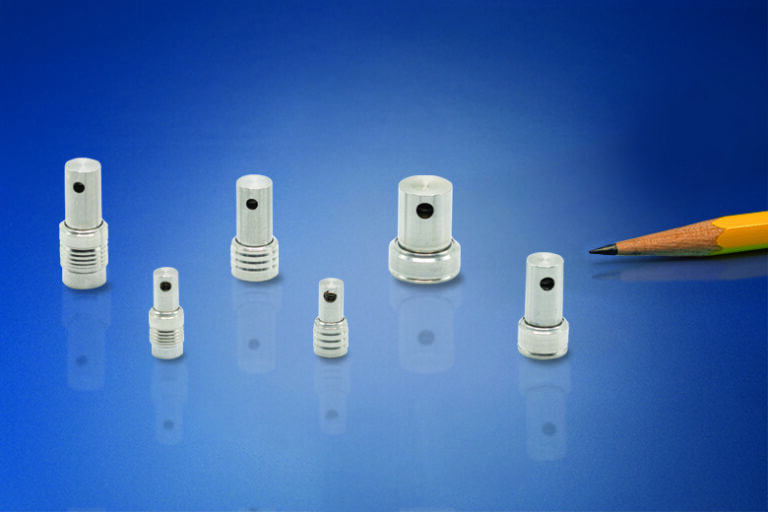
Available in multiple configurations, the Flow Regulating Valve is a compact, highly precise valve designed to ensure stable flow rates at low pressures.
The Flow Regulating Valve delivers stable, predictable flow in both single-phase and two-phase liquid cooling systems, ensuring consistent thermal performance as workloads and pressures change by:
The valve’s ability to begin regulating at very low differential pressure allows systems to operate at reduced inlet pressures, enabling operators to lower CDU pumping power for more efficient cooling performance. By maintaining stable flow under these conditions, the Flow Regulating Valve is particularly well-suited for energy-conscious data centers looking to optimize their cooling infrastructure without sacrificing reliability.
In two-phase systems, controlling flow to the chip with an orifice leaves the system vulnerable to downstream pressure fluctuations caused by boiling at the cold plate. At peak chip temperatures, vigorous boiling at the cold plate increases vapor quality and downstream pressure. This reduces the differential pressure across the orifice, limiting refrigerant flow when cooling demand is highest. To compensate, the system must run at a higher inlet pressure to account for this reduced flow rate, increasing the CDU pumping power needed to properly cool the chips and raising total energy consumption and operating costs.
The Flow Regulating Valve mitigates this issue by sensing these downstream pressure fluctuations and passively maintaining a constant flow rate to the chip. This allows inlet pressures to decrease, resulting in a lower pressure drop across the entire server – all while ensuring the chip receives adequate refrigerant flow to operate at its maximum processing capacity.
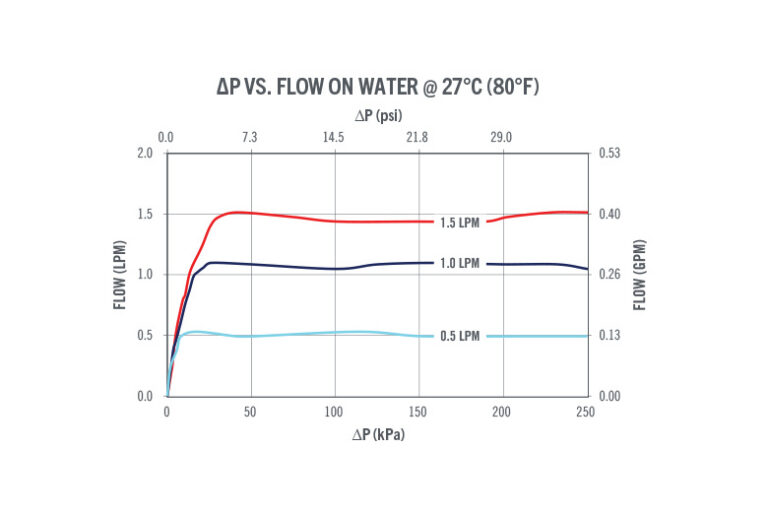 Flow curve showing how the Flow Regulating Valve maintains a constant flow rate across a wide range of pump pressures.
The Flow Regulating Valve’s compact design supports a wide range of deployment options, simplifying integration into both existing and next‑generation liquid cooling architectures. It can be incorporated at multiple points in the cooling loop – including directly inside the cold plate or upstream fittings, within an inline hose, mounted on a manifold, or integrated into a fitting. These configuration options accommodate space‑constrained server racks and enable drop‑in upgrades that reduce system downtime.
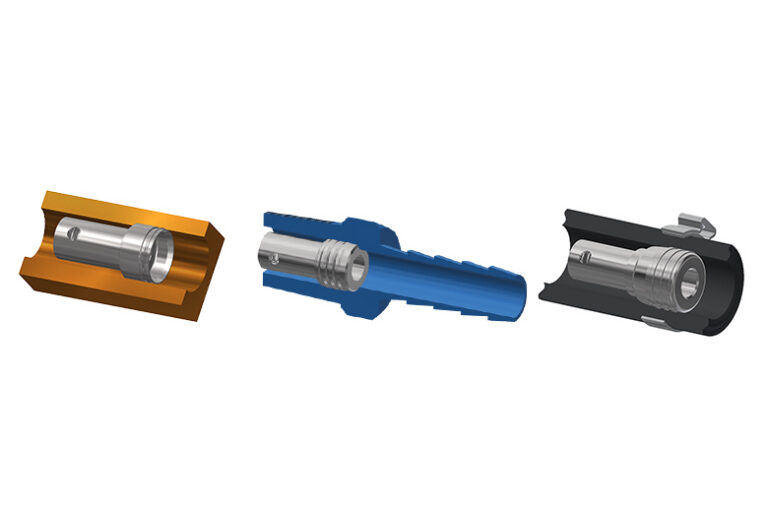
Multiple mounting options allow for easy installation and servicing in space-constrained server racks. From left: manifold mount, fitting-integrated, and inline hose mount.
The Flow Control Solenoid Valve improves energy efficiency through active, real-time flow control that integrates seamlessly into server designs. By precisely modulating coolant delivery to cold plates, it enables smarter, more responsive thermal management.
Optimized for single-phase systems and adaptable to two-phase environments, the Flow Control Solenoid Valve delivers high flow rates in a compact form factor. The valve offers a low pressure drop at typical D2C flow rates.
Key performance benefits include:
The Flow Control Solenoid Valve can support adjustments of coolant flow based on real-time predictive workload demands. It can be activated to the low flow state to reduce flow during low-intensity operations to minimize pumping energy, then switched to the high flow state before chip temperatures increase using predictive workloads to determine the demands of the system. Use of this valve in conjunction with predictive controls helps maintain thermal stability while optimizing energy efficiency across all operating conditions.
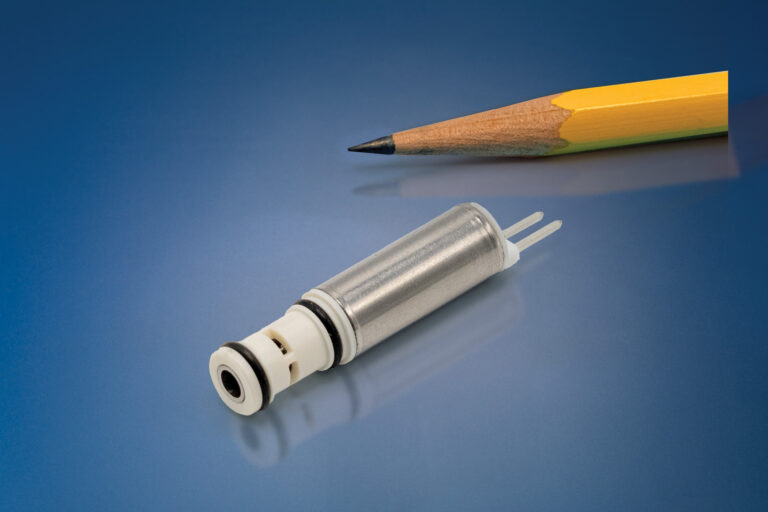
The Flow Control Solenoid Valve allows users to significantly reduce cooling energy costs by minimizing wasted coolant flow while improving the quality of their waste heat.
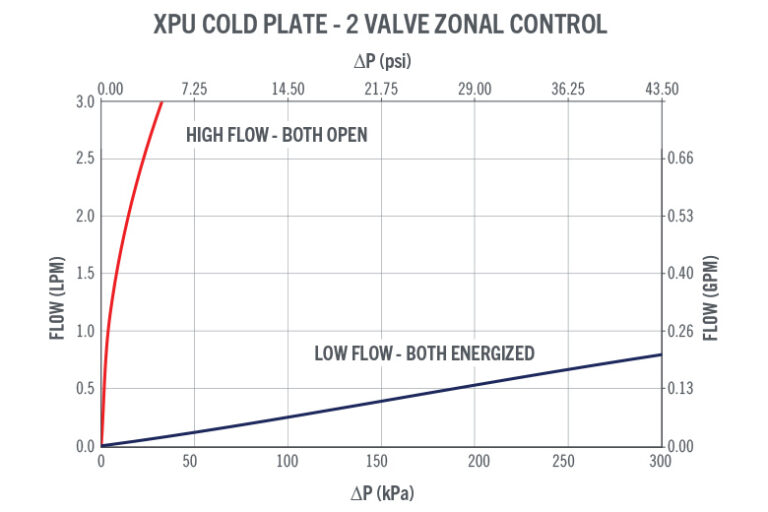
Flow curve demonstrating how discrete valve control with two Flow Control Solenoid Valves enables adaptive flow.
With its small footprint, the Flow Control Solenoid Valve can be installed at the chip level within server racks and integrated directly into cold plates or inline manifolds, enabling straightforward adoption within existing designs. Multiple inlet ports support targeted coolant distribution and zonal cooling, allowing effective mitigation of localized hot spots.
When paired together, the Flow Regulating Valve maintains a baseline flow rate while the Flow Control Solenoid Valve can be modulated to provide on-demand increased flow when predictive workload demand and thermal loads increase. Both products are backed by in-house engineering and automation teams, enabling rapid scaling to meet growing manufacturing demands.
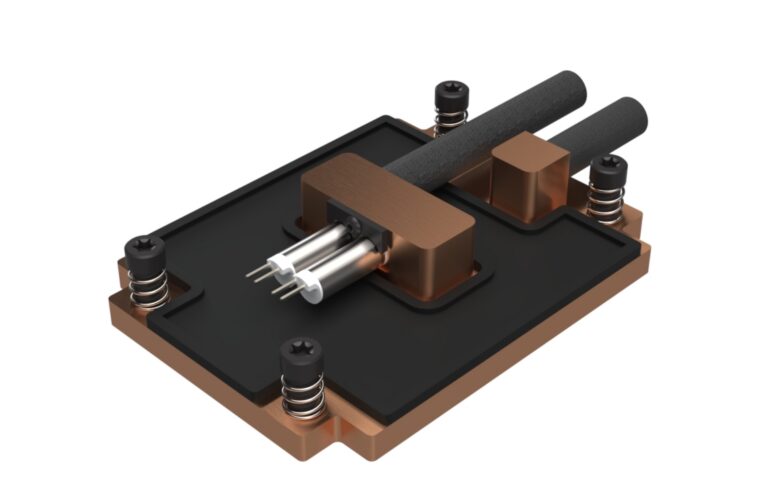
Assembly of two Flow Control Solenoid Valves mounted on a cold plate inlet.
The right fluid control partner doesn’t just supply components — they help you push processors harder, sustain higher energy densities, and protect system uptime under demanding workloads. That means consistent flow performance across varying thermal loads, fast turnaround from prototype to production, and components engineered to reduce energy consumption. Learn what to look for when selecting a fluid control supplier for your data center cooling application.
Whether you’re managing a hyperscale fleet or deploying next-generation AI technology, the pressure to perform at speed generates more heat than ever.
At The Lee Company, we’ve pioneered miniature chip-level liquid cooling solutions engineered to direct flow precisely where it’s needed – enabling processors to run harder, longer, and more efficiently. Our miniature components offer tight tolerances, low pressure drops, and reliable performance for both single-phase and two-phase data center cooling architectures. Every component is 100% functionally tested to ensure that performance throughout your system’s lifecycle.
We’ve spent over 75 years helping engineers solve complex fluid control challenges. Our global network of local technical experts means you have knowledgeable, engineer-to-engineer support wherever you are. When timelines tighten, our work across fast-moving industries means we keep pace with even the most demanding program schedules.
Keep cool and maximize performance in your data center. Connect with a Lee Sales Engineer today to discuss your data center cooling application.
Always verify flow calculations by experiment.
*There are many parameters to consider when determining V-Factor. Click here for more information.
 FAQs
FAQs 

