


Follow The Lee Company


Traditionally, gerotor pumps have been relied on to provide fuel delivery in high performance fuel systems. These legacy solutions, however, struggle to maintain efficiency and reliability under the extreme pressures and temperatures of modern mission profiles.
The Lee Company’s innovative radial piston pump technology provides a proven solution that outperforms traditional gerotor designs to deliver dependable performance when it matters most.
Gerotor pumps have internal clearances that can cause flow loss when back pressure increases or fuel viscosity changes. Because these losses vary unpredictably between individual pumps, engineers must either accept significant flow variability across the flight envelope or calibrate every unit in production. The result is often a patchwork of control profiles for different altitudes, temperatures, and fuel types.
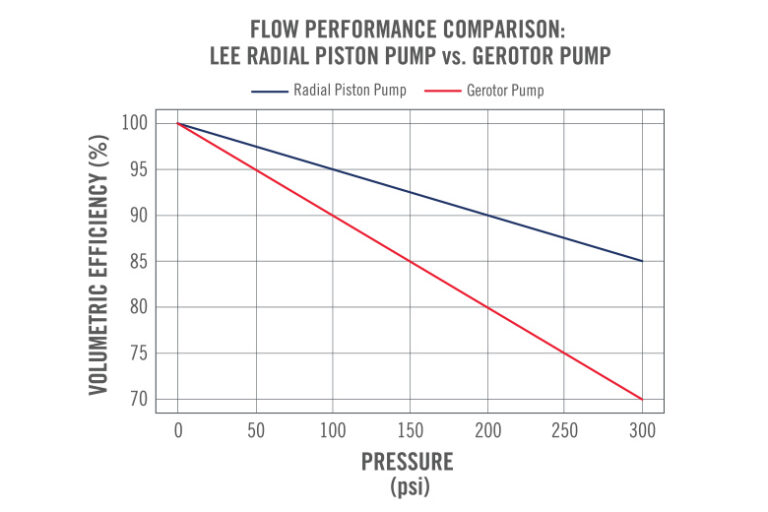
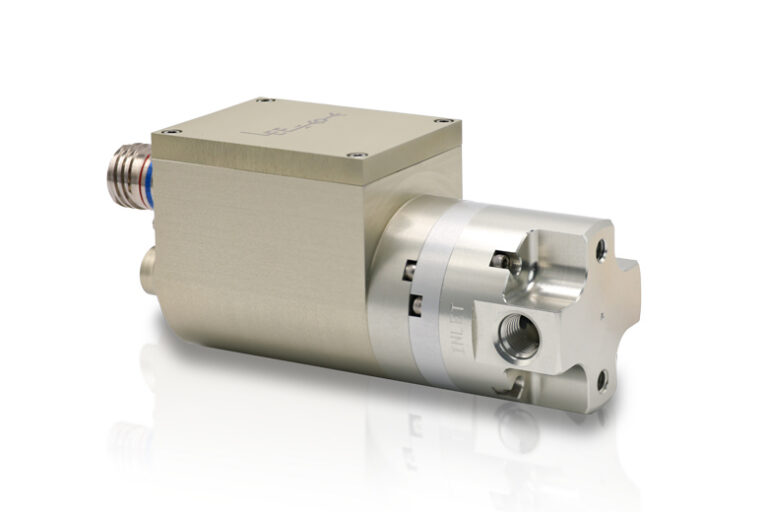
Engineered for high intensity applications, our 200 Series Hi Output Pump is a self-priming radial piston pump with high volumetric efficiency. It provides consistent fuel flow despite variations in altitude, temperature, and speed. Flow losses are minimized across the operating range to deliver best-in-class metering performance. Control electronics with integrated feedback allow this pump to respond directly to supplied voltage and support variable-speed operation for maximum efficiency.
Whether you’re powering next-generation unmanned systems or upgrading existing platforms, this miniature pump gives you precise, repeatable control of your fuel system – ensuring dependable performance throughout any mission. Click here for more information.
Explore how Lee components integrate into next‑generation fighter aircraft across general, flight, engine, weapons, and landing systems. Use this interactive to discover how precision‑engineered solutions from The Lee Company work together to deliver reliability, responsiveness, and mission‑critical performance in the most demanding defense environments.

Always verify flow calculations by experiment.
*There are many parameters to consider when determining V-Factor. Click here for more information.


