


Follow The Lee Company


In the heavily regulated molecular diagnostics (MDx) industry, many instrument designers rely on tried-and-true legacy technologies for fluid control which provide adequate results but could be wasteful.
With the advances in pressure control and sensing, it is worth investigating the next generation of devices.
When was the last time you seriously considered alternate fluid control technologies?
If you worked with early pneumatic fluid control systems you likely found them bulky, costly, and hard to scale. And if you tried to push them further, issues like bubble formation, architectural complexity, and precision control probably stood in your way.
Many of these concerns stem from outdated implementations or incomplete integration strategies. We have worked with dozens of system designers to implement modern pneumatic systems that exceed the performance of legacy fluid control technologies. The right components, when paired with a robust control architecture, can unlock significant advantages for microfluidic devices.
This article looks to address the common concerns – or ‘myths’ – that might exist around using a pneumatic system in your MDx application, and present ‘The Lee Solution’ for practical implementation. Let’s begin by looking at the pneumatic control method.
Pressure-driven flow or air-over-liquid is becoming more prevalent in diagnostics for precise fluid movement.
The working principle of pressure-driven flow is that the head space i.e. the volume of gas above a liquid in a closed reservoir, is pressurized, driving liquid through a tube below the liquid surface. This architecture separates the pneumatic system from the reagent and sample fluid path. This significantly reduces cross contamination and enables true closed-loop control of pressure profiles. With closed-loop flow control (pressure source and inline flow sensor), a pressure system can accurately hold target flow rates even as fluid restriction and viscosity change.
Other advantages include:
A pressure-driven system that incorporates Lee disc pumps & High Density Interface (HDI®) solenoid valves [Figure 1] can meet and exceed levels of precision control, repeatability and reproducibility compared to systems using legacy technologies.
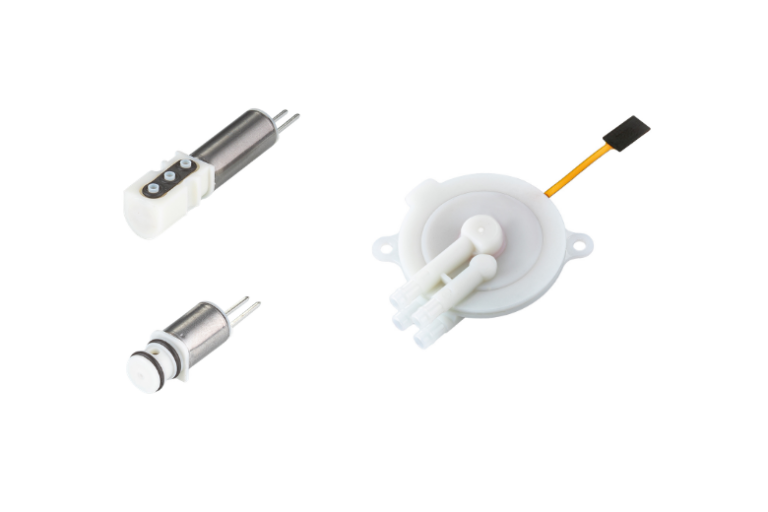
Figure 1. Lee HDI solenoid valves & disc pump
The disc pump is a piezoelectric micropump with a unique feature set of pulsation-free flow, silence and an infinite turndown ratio that can be combined with our low power, low leakage, long-life HDI solenoid valves to create a highly controllable, super precise, leak-proof pneumatic control system for your molecular diagnostics application.
As sample volumes continue to shrink in MDx systems, precision control becomes even more critical.
A common misconception is that pneumatic systems are not precise enough for molecular diagnostic systems. This may have been the case with legacy pumping technologies. However, the move to advanced pressure control systems with modern sensing technology, and the dynamic response that can be achieved with the disc pump, has greatly improved levels of precision fluid control.
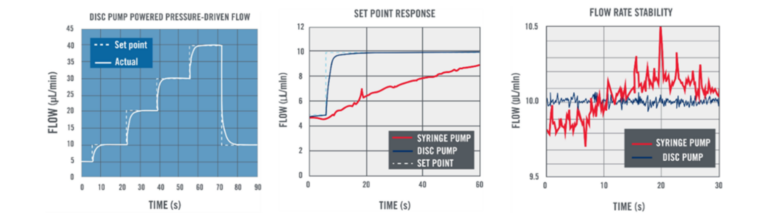
Figure 2. The flow-rate control and rapid response of a disc pump versus a syringe pump
For example, a single disc pump and dual-HDI valve sub-system can generate both positive and negative pressure, enabling the seamless movement of fluids backwards and forwards through microfluidic circuits. [Video 1]
This product combination can offer super precise control of liquid movement. This is due to the tight flow control resolution of the disc pump and low leak performance of our HDI valves.
The disc pump has an infinite turn-down ratio with very little inertia. As such, with feedback sensors, it can react to changes in system conditions (viscosity, set point change, fluid resistance/pressure spikes, etc.) much faster than a syringe pump [Figure 2].
Thanks to this capability, you can control the flow rate/fluid volume tightly and make critical real-time adjustments to the system that may ultimately optimize the desired on-chip reaction.
To make prototyping this type of system easy, we include a motherboard in our Piezoelectric Disc Pump Development Kit that has a pressure sensor and valve drivers. This enables the closed loop control necessary for achieving a particular target pressure, as well as following those desired pressure profiles with incredible accuracy, despite system changes.
Pressure measurements are received by the Drive PCB and PID control can be used either via the app or using serial commands to modulate the input power to achieve the target pressure.
The drive PCB can also be controlled via an analog input, or via commands sent over a serial connection, providing users with the ability to implement their own control schemes. If needed, the motherboard also allows for simple connection to an external flow sensor.
Fluid resistance, surface tension, and viscosity of fluid all mean that the ability to achieve a range of pressure levels in MDx systems is essential. This includes higher pressures, which allow for faster fluid movements and more rapid cycling to speed up turnaround times.
The disc pump itself weighs only 5 g with a 21 mm diameter. Each disc pump has its own operating envelope of performance. Consequently, a broad range of performance can be achieved with single pumps through parallel (higher flow, lower pressure) and series (higher pressure, lower flow) configurations. If performance requirements are not met with a single pump, combinations of pumps can be used.
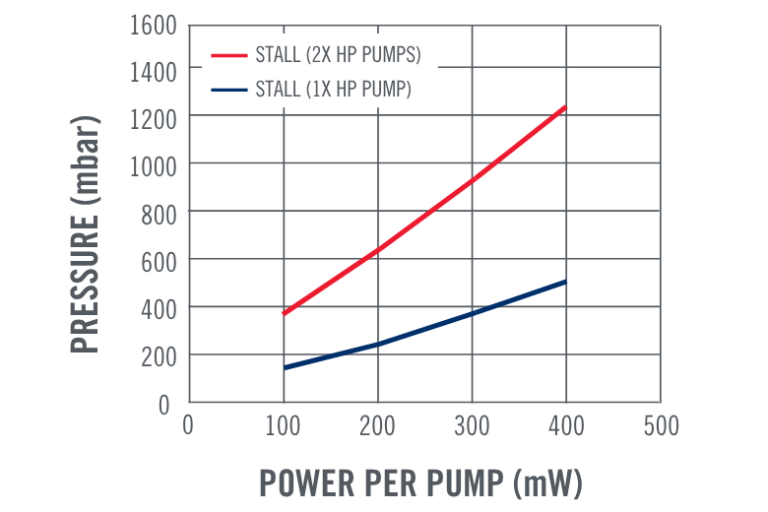
Figure 3. Experimental pressure testing of two HP disc pumps
Figure 3 shows some experimental testing from our lab running two HP pumps in series. The results indicate that two pumps run together can reach higher pressures whilst running at relatively low power. This can increase service life and reduce heat generation – alongside overall size reduction.
The ability to reach 1 bar pressure levels opens avenues to deliver higher pressures in many microfluidic applications – in fact, respondents at a microfluidics symposium we ran noted that reaching a pressure of 1 bar would cover most of their application pressure requirements. Talk to us on how this could work in your system, as specific testing for validation within a diagnostic device would be required.
A common misconception is that air-based systems introduce air into the fluid path, encouraging bubble formation.
In fact, a well-designed pneumatic system can often reduce bubbles, and in some cases, give you more tools to manage bubble dynamics.

Figure 4. Laminar Flow vs. Turbulent Flow
A smooth, stable flow profile will prevent bubble formation to keep interfaces consistent and predictable, enabling the ability to alter fluid flow rates, mixing processes, and facilitate complex fluid manipulations.
The disc pump moves just a few nanolitres of air per cycle and, as such, the resultant air flow is effectively pulsation-free. When combined with a flow-rate sensor, the disc pump also delivers precise flow control in a compact form factor.
This enables laminar flow paths in microfluidic circuits, and may improve fluid resistance monitoring and adjustments, optimize efficiencies of on-chip reactions, and simplify many microfluidic workflows.
For example, in Video 2, we can see fluids mix via diffusion rather than turbulence, as different color liquids can be made to flow side by side in laminar flow paths to produce concentration gradients.
Early-stage prototypes of pneumatic systems with legacy technology were large, complex and expensive. Typically, they required an air pump and pressure controller, which does not lend itself to miniaturization and point-of-care (POC) diagnostics.
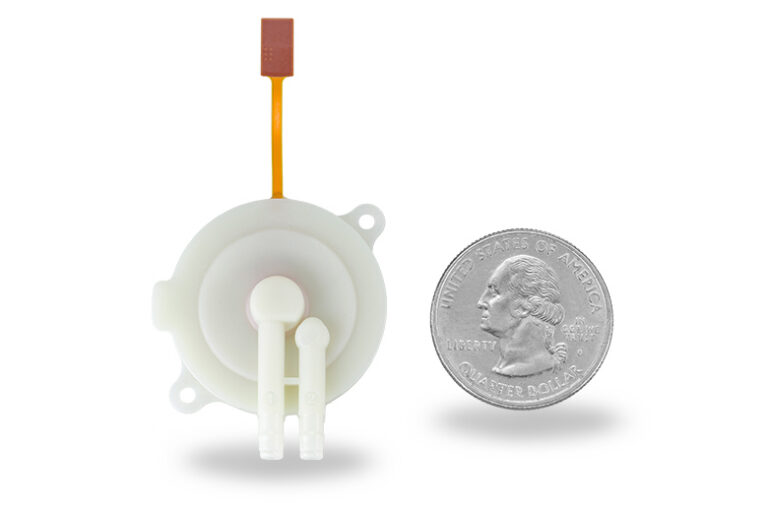
Figure 5. A disc pump size comparison
A disc pump & HDI sub-system radically reduces the size of a pressure driven flow architecture. In some cases, the disc pump can be used as both pressure source and pressure regulator – eliminating the need for separate compressors and regulators.
Combined in a manifold they make a small, high performing sub-system that is likely more cost effective than alternative technologies. With less tubing, it reduces leak points and is sold as a drop-in fully tested solution. [Figure 6].
Manifolds can minimize size, cost, reduce leak points and offer the advantage of a drop-in, fully tested solution.
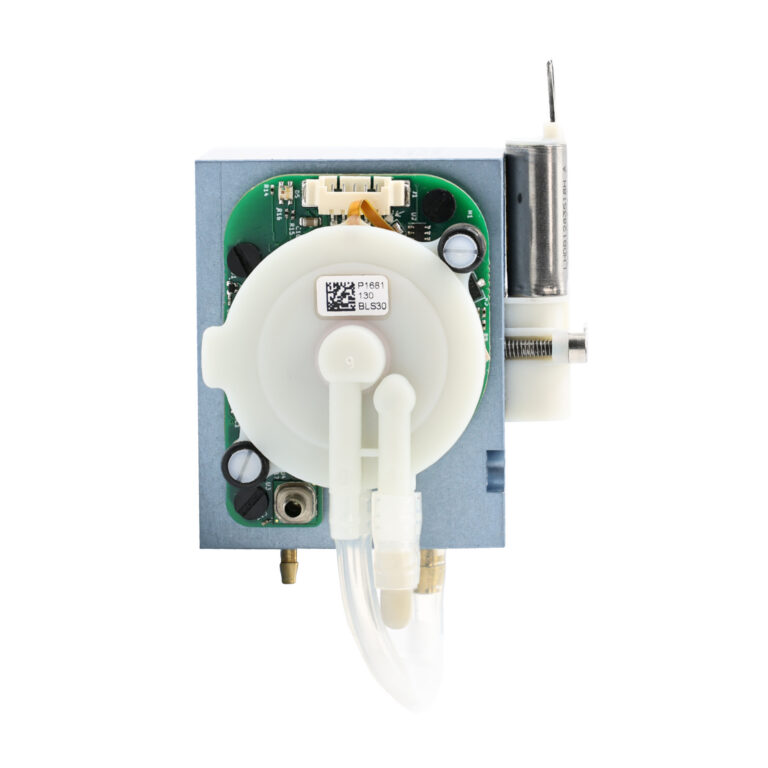
Figure 6. A disc pump and HDI Manifold
Moreover, as automation increases, the need to reduce manual human intervention (e.g., manual reagent dosing or frequent manual replacement of parts) becomes more important, integrated manifolds help to reduce leak and failure points and simplify maintenance.
Coupled with drive electronics and pressure sensing, the disc pump provides a miniature pump and pressure regulator solution all-in-one, eliminating the need for separate compressors and regulators that consume valuable space and add cost.
Pneumatic control systems not only elevate control and consistency in molecular diagnostic instruments, but also provide a scalable, cost‑effective foundation for next‑generation designs.
Our Piezoelectric Disc Pump Development Kit enables the rapid evaluation of one or multiple pumps, together with solenoid valves, making it easy to test system-level prototypes and evaluate the unique features of the disc pump technology.
Our engineers are experts at optimizing fluidic performance – get in contact here.
Always verify flow calculations by experiment.
*There are many parameters to consider when determining V-Factor. Click here for more information.
 FAQs
FAQs